
Conversation Topics | 2026-05-25
Best Ways to Improve Language Skills Through Video Chat

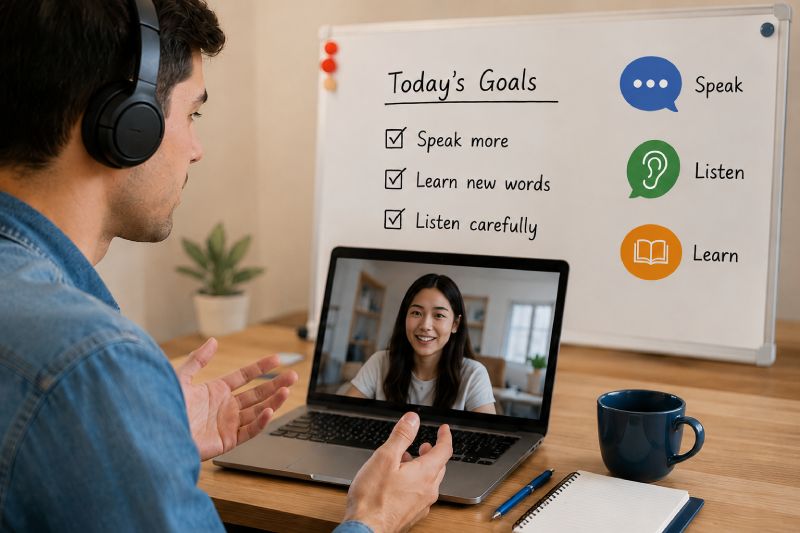
Video chat is a practical way to practice a language because it lets you speak, listen, and respond in real time. Instead of only memorizing words or studying grammar, you can use the language while talking with another person.
It also helps you build confidence. You may pause, ask someone to repeat a sentence, or make mistakes, but that is part of learning. The more you practice through live conversations, the easier it becomes to think and respond in another language.
This guide explains how to use video chat to improve speaking fluency, pronunciation, listening, and confidence while keeping each conversation safe and comfortable.
Why Video Chat Is Useful for Language Practice
Video chat is useful for language practice because it turns study into active communication. You are not only reading words or repeating grammar rules. You are listening, responding, asking questions, and using the language in a more natural setting.
It Helps You Practice Real-Time Speaking
Speaking in real time trains you to think faster in another language. You need to choose words, form sentences, and respond while the conversation is still moving.
This kind of practice helps fluency because it trains you to respond without translating every sentence in your head. Even short conversations can make speaking feel less slow and more natural over time.
It Improves Listening in Natural Conversations
Video chat helps you hear how people actually speak. Real conversations often include different accents, pauses, slang, fast speech, and casual expressions.
This is different from textbook audio. You learn how words sound in daily conversation, which can make listening feel easier and more practical.
It Builds Confidence With Real Speakers
Many language learners know vocabulary but feel nervous when speaking with real people. Video chat gives you a direct way to practice with native speakers, fluent speakers, or other learners who are comfortable using the language.
The more you speak, the less intimidating it feels. Mistakes become part of the process, not something that stops the conversation.
It Makes Language Learning Feel More Interactive
Video chat makes language practice feel less passive. You can see facial expressions, hear tone, ask follow-up questions, and react naturally.
This makes practice feel closer to real life. It also helps you stay engaged because each conversation is different.
How to Improve Speaking Fluency During Video Chat
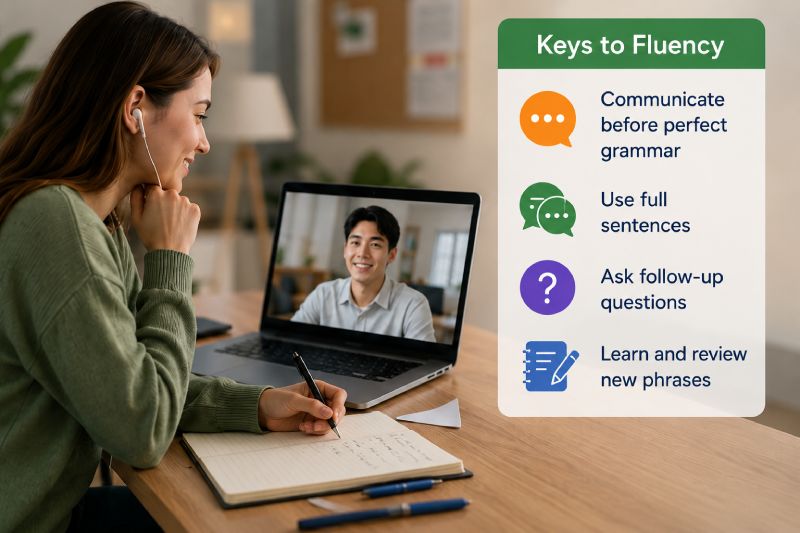
Improving fluency through video chat is not about speaking perfectly. It is about speaking more often, responding more naturally, and learning how to keep a conversation going without stopping too much.
During each video chat, try to focus on a few simple goals:
- Say your ideas clearly
- Use complete sentences when you can
- Ask follow-up questions
- Notice useful phrases from the other person
- Review new words after the conversation
Focus on Communication Before Perfect Grammar
Perfect grammar is not the first goal during a live conversation. If you stop too often to correct every sentence, the chat may feel slow and stressful.
Focus on getting your meaning across first. You can fix grammar later, but real-time speaking helps you build the habit of using the language naturally.
Speak in Full Sentences When Possible
Short answers are easy, but they do not give you enough speaking practice. Instead of only saying "yes," "no," or "maybe," try to answer in full sentences.
For example, instead of saying "music," you can say, "I like pop music because it helps me relax." This gives you more practice with sentence structure, vocabulary, and natural expression.
Use Follow-Up Questions to Extend the Conversation
Follow-up questions help you keep the conversation moving. They also give you more chances to listen, respond, and practice new words.
You can use simple questions like:
- What about you?
- Why do you like that?
- How did you learn about it?
- Can you tell me more?
- Is that common in your country?
These questions make the chat feel more natural and reduce awkward pauses.
Record New Words and Phrases After the Chat
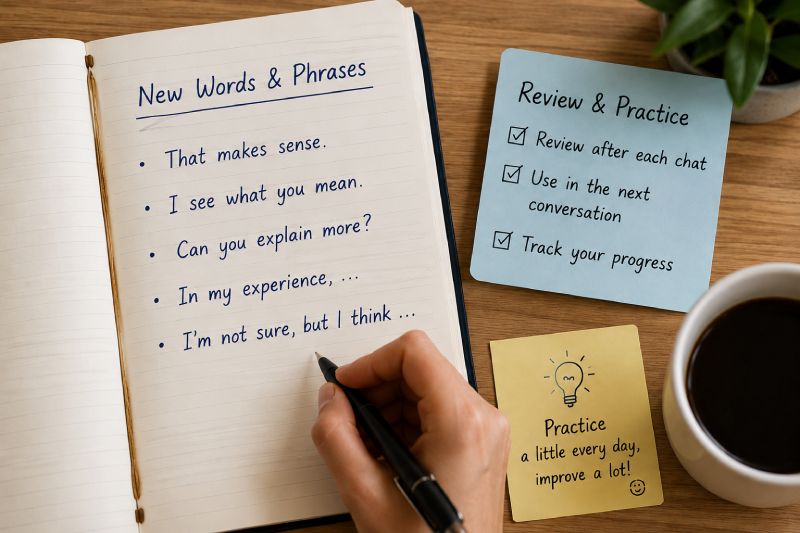
After the video chat ends, write down useful words, phrases, or expressions you heard. Do not try to record everything. Focus on phrases you might use again.
You can save:
- New vocabulary
- Natural expressions
- Better ways to answer common questions
- Words you heard but did not fully understand
Reviewing these notes helps you reuse new phrases in the next chat instead of forgetting them after one conversation.
How to Use Video Chat to Improve Pronunciation and Listening
Video chat can help you improve pronunciation and listening because you hear language in a real conversation. You can notice how people pronounce words, where they pause, how they stress certain sounds, and how their tone changes with meaning.
To make each chat more useful, pay attention to:
- Words you hear often
- Sounds that are hard to repeat
- Sentences spoken very quickly
- Phrases that sound different from textbook audio
- Tone, rhythm, and natural pauses
Pay Attention to Natural Accent and Intonation
Real speakers do not always sound like language learning recordings. They may speak faster, connect words, shorten sounds, or use a natural accent.
During a video chat, listen to how the other person says common phrases. Notice which words they stress, where their voice rises or falls, and how their tone changes when they ask a question or show emotion.
Ask the Other Person to Repeat or Slow Down
If you do not understand something, ask the other person to repeat it or say it more slowly. This is normal in language practice and can make the conversation more useful.
You can use simple phrases like:
- Could you say that again?
- Can you speak a little slower?
- What does that word mean?
- How do you pronounce that?
- Can you type that word for me?
These questions help you stay in the conversation instead of guessing and feeling lost.
Practice Shadowing Short Sentences
Shadowing means listening to a sentence and repeating it right after the speaker. It helps you copy pronunciation, rhythm, and sentence flow.
You do not need to shadow long conversations. Choose short sentences that sound useful or natural. Repeat them after the chat, or ask the other person to say the phrase again so you can practice the sound.
Compare How Words Sound in Real Conversation
Some words sound different in real conversation than they do when spoken slowly. Native or fluent speakers may connect words, reduce sounds, or speak with regional accents.
After the chat, write down words that sounded unfamiliar. Then compare how they sound in a dictionary, a short video, or another conversation. If the word sounds different in real speech, write down the full phrase, not just the single word.
Common Challenges When Practicing Languages Through Video Chat
Practicing a language through video chat can feel exciting, but it can also feel uncomfortable at first. Real conversations move faster than lessons, and you may need time to get used to speaking with another person.
Common challenges include:
- Feeling nervous before the call starts
- Missing words when the other person speaks quickly
- Running out of topics
- Worrying too much about mistakes
- Not knowing how to find the right practice partner
Feeling Nervous Before Speaking
It is normal to feel nervous before speaking in another language. You may worry about your accent, grammar, vocabulary, or whether the other person will understand you.
Start with short conversations. A five-minute video chat can be enough in the beginning. As you practice more often, speaking will start to feel less stressful.
Not Understanding Fast Native Speech
Native or fluent speakers may talk faster than language learning materials. They may also use slang, connected sounds, or casual expressions that are hard to catch.
If you miss something, do not pretend to understand. Ask the other person to repeat it, slow down, or type the word in chat. This turns confusion into useful practice.
Running Out of Things to Say
Many learners stop speaking because they do not know what to say next. This does not mean your language level is too low. It usually means you need a few simple topics ready before the chat.
You can prepare topics such as:
- Daily routines
- Food and travel
- Music or movies
- Hobbies
- School or work
- Culture and holidays
- Language learning goals
Having a small topic list makes the conversation easier to continue.
Being Afraid of Making Mistakes
Mistakes are part of language practice. If you wait until your grammar is perfect, you may never feel ready to speak.
During video chat, focus on communication first. If the other person understands your meaning, the conversation is already working. You can review grammar, vocabulary, and better expressions after the chat ends.
Finding the Right Language Partner
The right language partner should be patient, respectful, and willing to keep the conversation balanced. A good partner does not make you feel embarrassed for making mistakes.
Look for people who are interested in casual conversation, cultural exchange, or mutual language practice. If the chat feels uncomfortable, one-sided, or disrespectful, it is fine to end it and try another conversation.
Safety Tips for Practicing Languages Through Video Chat
Video chat can be helpful for language practice, but you still need to protect your privacy. Since you may be talking with people you just met online, keep the conversation friendly, simple, and safe.
Avoid Sharing Personal Information Too Quickly
Do not share your full name, home address, phone number, school, workplace, or private social media accounts too early. You can talk about general topics like hobbies, food, travel, music, or language learning goals.
If someone asks for too much personal information, keep your answer general or end the conversation.
Keep the Conversation Respectful and Comfortable
Language practice should feel friendly and respectful. A good conversation partner should be patient, polite, and willing to let you speak.
If the conversation becomes rude, uncomfortable, or too personal, you do not need to continue. It is okay to leave and find another person to practice with.
Use Block and Report Features When Needed
If someone behaves inappropriately, pressures you, or makes you feel unsafe, use the block or report feature. These tools help you stop unwanted interactions quickly.
You do not need to explain yourself when a chat crosses a boundary. Your comfort comes first.
Choose Platforms With Clear Safety Controls
Use video chat platforms that offer privacy settings, reporting tools, and clear community rules. These features give you more control when practicing with people online.
Clear safety controls make it easier to leave uncomfortable chats and return to the main goal of practicing the language.
Conclusion
Video chat is a practical way to improve language skills because it lets you speak, listen, and respond in real time. It can help with fluency, pronunciation, listening, and confidence when you use each conversation with a clear goal.
You do not need to speak perfectly. Start with simple topics, ask follow-up questions, write down new words, and review useful phrases after each chat.
For better results, choose a platform that gives you access to real people, useful chat tools, and clear safety controls. With regular practice, video chat can make speaking another language feel less intimidating.
How LivU Can Support Language Practice Through Video Chat
LivU can support casual language practice through real-time video chat and text chat. It is not a formal language course, but it can give learners more chances to hear everyday speech, respond quickly, and talk with people from different backgrounds.
Before starting a language practice chat, you can prepare a few simple goals:
- Practice one or two daily topics
- Listen for useful expressions
- Ask the other person to repeat unclear words
- Use text chat when you need spelling or clarification
- Write down new phrases after the conversation
Real-Time Video Chat Creates Natural Speaking Practice
Real-time video chat gives learners a chance to use the language in a live conversation. You need to listen, think, and respond while the chat is still moving.
This kind of practice is useful because it feels closer to real life. You are not only studying sentences. You are using them with another person.
Global Matching Helps You Meet People From Different Places
LivU's global matching can help users meet people from different countries and language backgrounds, which may expose learners to different accents, expressions, and everyday topics.
It can also make practice feel more interesting. Instead of repeating the same textbook topics, you can talk about culture, food, travel, music, daily life, or language learning experiences.
Text Chat Can Support New Words and Clarification
Text chat can be helpful when you do not understand a word during a video conversation. The other person can type the word, explain the meaning, or help you check the spelling.
This is useful for language learners because it gives you a second way to understand the conversation. You can listen first, then use text chat to confirm words or save useful phrases.
Casual Conversations Make Practice Feel Less Like Studying
Language practice does not always need to feel like a formal lesson. Casual video chats can make learning feel more relaxed because the conversation is based on real topics and real reactions.
This can help learners build confidence over time. When the setting feels relaxed, it becomes easier to speak more often and worry less about small mistakes.
FAQ
What is the best way to improve language skills online?
The best way to improve language skills online is to combine active speaking, listening, vocabulary review, and real conversations. Video chat can be useful because it lets learners practice live responses, pronunciation, and listening in a more natural setting. For better results, prepare simple topics before each chat and review new words afterward.
Can video chat help improve language skills?
Yes, video chat can help improve language skills because it gives you real speaking and listening practice. You can use the language in live conversations instead of only studying from books, lessons, or vocabulary lists.
Is video chat good for improving pronunciation?
Yes, video chat can help with pronunciation because you hear how real people speak. You can listen to accent, rhythm, tone, word stress, and connected speech in natural conversations.
How do I find people to practice languages with online?
You can find language practice partners through video chat platforms, language exchange communities, or social chat platforms with global matching. Look for people who are respectful, patient, and interested in conversation.
What should I talk about during language practice video chats?
Start with simple topics like hobbies, food, music, travel, daily life, movies, or culture. These topics are easy to discuss and help you practice common words, follow-up questions, and natural replies.
How often should I practice a language through video chat?
Practicing two or three times a week can help you build confidence and fluency. Even short chats can be useful if you speak actively and review new words afterward.
What should I do if I do not understand the other person?
Ask the person to repeat, slow down, or type the word in chat. You can say, "Could you say that again?" or "Can you speak a little slower?"
Is it okay to make mistakes during language practice?
Yes, making mistakes is normal. The goal is to communicate and improve over time, not to speak perfectly from the first conversation.


