
Making Friends | 2026-09-28
Anonymous Chat vs. Profile-Based Chat: Which Should You Choose?
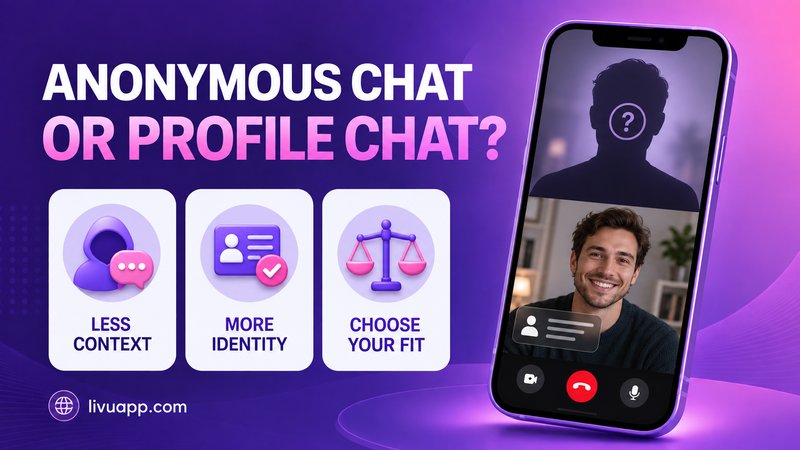
Anonymous chat is useful when you want a quick, low-pressure conversation without building a detailed public identity. Profile-based chat is usually better when you want to recognize people, build trust gradually, and maintain a friendship over time.
The important distinction is not simply whether a platform displays your real name. It is how much context people receive before chatting, whether accounts support continued contact, and what controls exist when someone behaves inappropriately.
Neither format removes online risk. Anonymous chat can reduce how much personal information is immediately visible, while profile-based chat can improve accountability without guaranteeing that every profile is genuine. Your reason for chatting should determine which trade-off makes more sense.
Anonymous Chat vs. Profile-Based Chat: Main Differences
Anonymous and profile-based platforms create different expectations before the first message is sent.
In an anonymous space, the conversation usually begins with limited information. On a profile-based service, people may first see a name, photo, interests, short introduction, location preference, or previous activity.
| Comparison | Anonymous chat | Profile-based chat |
|---|---|---|
| Information shown initially | Limited | More personal context |
| Starting a conversation | Usually fast | Often more selective |
| Continuing the connection | May be difficult | Usually easier |
| Accountability | Often lower | Potentially higher |
| Best suited for | Casual or temporary conversations | Ongoing social connections |
| Main risk | Unpredictable behavior | False or misleading profiles |
The label used by a platform does not tell you everything. Review its account requirements, privacy policy, moderation system, and communication tools before deciding how private or accountable the experience really is.
Limited Identity Information vs. Detailed User Profiles
Anonymous chat usually asks users to reveal little before participating. A temporary username or automatically assigned identity may be enough to enter a conversation.
This can help people who want to:
- Discuss a topic without connecting it to a public profile
- Practice conversation with less social pressure
- Ask a general question
- Join a temporary group discussion
- Avoid displaying a large amount of personal information
However, limited identity information also means limited context. You may not know whether the other person shares your interests, communicates respectfully, or is representing themselves honestly.
Profile-based chat provides more information before contact. A profile might include a photo, name, interests, language, age, or short introduction. These details can make it easier to identify a conversation starter and decide whether someone seems relevant to your goals.
A detailed profile is not proof of identity or trustworthiness. Photos can be stolen, biographies can be copied, and interests can be invented. Treat a profile as useful context rather than verified evidence about the person behind it.
You can learn more about different room formats in What Is a Chat Room?.
Immediate Conversations vs. More Selective Connections
Anonymous chat is often designed to minimize the distance between arriving and talking. Instead of spending time completing a profile, you can enter a room or connect with another participant quickly.
This speed can be useful when the conversation itself matters more than the person’s background. It may suit a short exchange about entertainment, everyday life, or a shared event.
The disadvantage is unpredictability. Some conversations end almost immediately because neither person has enough context to continue. Others become uncomfortable because the participants entered with completely different expectations.
Profile-based platforms make discovery more selective. Before sending a message, you may be able to consider:
- Shared interests
- Language preferences
- Communication style
- Profile information
- Community participation
- Whether the account appears complete and consistent
This process takes longer, but it provides natural starting points. Instead of opening with a generic greeting, you can respond to something the person chose to share.
Selectivity can also create its own problems. People may make quick judgments based on photos or polished profiles, overlooking potentially compatible friends who present themselves less confidently online.
Temporary Privacy vs. Greater Accountability
Anonymous chat can provide privacy in a limited sense: other participants may initially know less about you. That does not mean you are technically invisible or impossible for the platform to identify.
A chat service may still process information such as:
- IP address
- Device information
- Account or session identifiers
- Messages or reports
- Cookies
- Approximate location
- Usage and moderation data
The exact information depends on the platform and its current privacy policy. “Anonymous” should therefore be understood as limited visibility between users, not a guarantee that no data exists.
Profile-based chat offers more social accountability because the same account may remain visible across conversations. People may behave more carefully when reports, blocks, or policy violations can affect an established account.
Accountability is still not certainty. A person may operate a misleading profile or create another account after being removed, depending on the platform’s controls. Look for services that combine accounts with clear rules, reporting options, moderation, and age checks.
Which Chat Style Better Fits Your Needs?
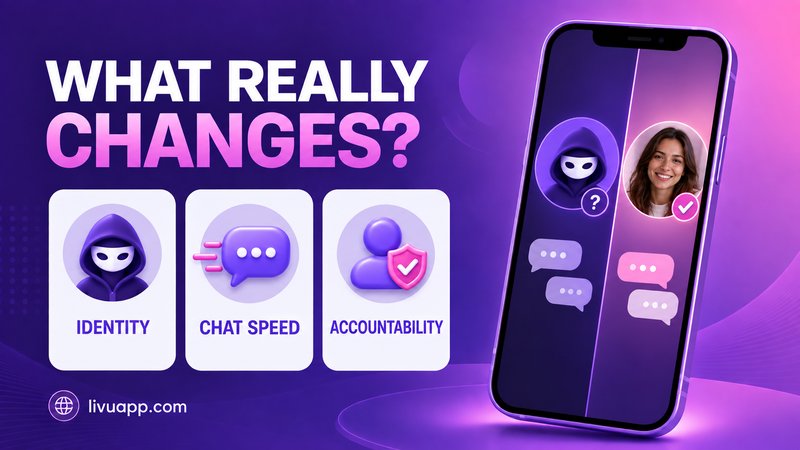
Choose the format that supports what you actually want from the conversation. Someone seeking a brief exchange has different needs from someone hoping to build a lasting friendship.
It is also reasonable for your preference to change. You may initially want limited visibility and later decide that continued contact and more context are important.
Choose Anonymous Chat for Low-Pressure, Short-Term Conversations
Anonymous chat may fit your needs when you want to participate without creating a detailed social presence.
Common reasons include:
- You want a casual conversation right now.
- You are practicing social or language skills.
- You prefer not to connect a discussion to your public identity.
- You are joining a temporary discussion about an event.
- You do not need to contact the same person again.
- You want to observe a group before participating.
Limited profile information can reduce the feeling of being judged based on appearance, follower counts, or previous posts. It can make the first message feel easier.
The same lack of identity can make conversations less reliable. Someone who expects no future contact may feel less responsible for what they say. You may encounter spam, harassment, explicit content, false claims, or people repeatedly ending chats without explanation.
Do not use anonymity to ignore normal precautions. Avoid sending sensitive information, clicking unfamiliar links, downloading files, or moving to another platform simply because a stranger asks.
Anonymous chat is most useful when you accept that the interaction may remain temporary.
Choose Profile-Based Chat When You Want Trust and Continuity
Profile-based chat is generally the stronger option when you hope to recognize someone, return to a conversation, and develop a friendship gradually.
Profiles can support continuity by giving both people stable reference points. You may remember someone through their interests, photo, language, or previous conversation rather than beginning from zero each time.
This format may suit you when:
- You want to make friends rather than have one temporary chat.
- Shared interests help you feel comfortable.
- You prefer to choose who you contact.
- You want conversations to continue over several days or weeks.
- You value account-level blocking and reporting.
- You want more context before starting a video conversation.
Trust should still develop through behavior. Notice whether the person remembers details, respects boundaries, and communicates consistently. A complete profile may create a good first impression, but reliable actions matter more.
Avoid assuming that frequent messages automatically indicate friendship. Healthy connections involve balanced effort rather than pressure for immediate replies, personal information, money, or private images.
If an online conversation begins to feel meaningful, How to Turn an Online Chat Into a Real Friendship explains how to develop it without rushing.
Combine Direct Discovery with Time to Learn About Each Other
The two models do not need to be completely separate. Some platforms allow people to begin with a direct conversation and then learn more about each other through profiles, account features, or continued chats.
This approach can combine the spontaneity of immediate chat with the continuity of an account-based connection.
A sensible progression might look like this:
- Begin with a simple, low-pressure conversation.
- Discuss an interest or everyday topic.
- Observe whether communication feels respectful.
- Review the profile information available on the platform.
- Continue chatting without immediately sharing external contact details.
- Move from text to video only when both people are comfortable.
- Add or reconnect with the person when the platform supports it.
The first conversation does not need to establish complete trust. It only needs to answer a smaller question: does talking to this person feel comfortable enough to continue?
Let additional trust develop through repeated interaction. If someone’s claims repeatedly conflict with their profile or previous messages, slow down rather than explaining away every inconsistency.

What to Check Before Choosing Either Type of Chat
A platform should not be judged only by whether it calls itself anonymous or profile-based. The quality of its safety tools, rules, account system, and privacy controls may matter more than the label.
Check the current policies before participating, especially when a platform connects you directly with unfamiliar people.
Moderation, Reporting, Blocking, and Age Requirements
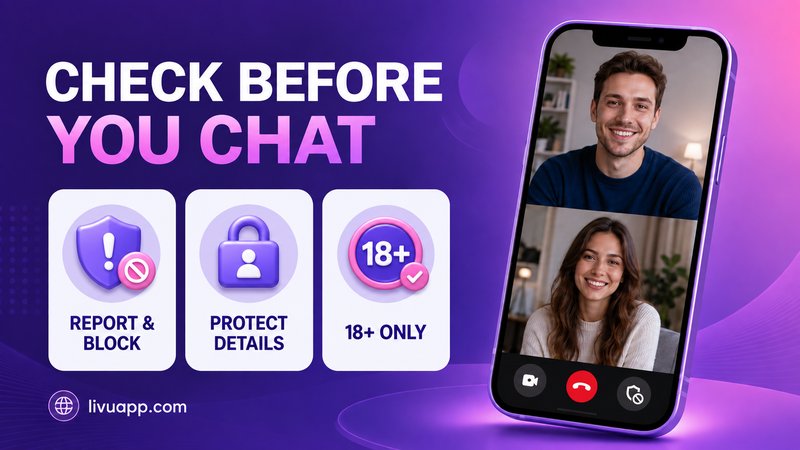
Look for controls that help you respond when a conversation becomes inappropriate.
Useful protections include:
- A visible report button
- The ability to block another account
- Clear community guidelines
- Human or automated moderation
- Age eligibility rules
- Account enforcement
- Controls over who can contact you
- A simple way to leave or end a chat
- Accessible support information
Reporting should be easy to reach from the conversation itself. If a person sends threats, sexual content, scams, or repeated harassment, you should not have to search through several settings pages before taking action.
Age requirements also matter. A service intended only for adults should clearly state that limitation and explain how suspected underage accounts are handled. Do not try to bypass age verification or help another person avoid it.
Even well-moderated platforms cannot review every interaction before it occurs. Leave a chat immediately when something feels unsafe and use the available blocking or reporting tools.
Personal Information, Screenshots, and False Identities
Anonymity can disappear quickly when users reveal identifying details during a conversation. A nickname offers little protection if you also share your workplace, neighborhood, full birthday, and daily schedule.
Avoid sharing:
- Your home or work address
- Full financial information
- Passwords or verification codes
- Government identification
- Private account recovery details
- Intimate photographs
- Travel plans showing when your home is empty
- Documents visible in the background
- Another person’s private information
Assume that messages, photos, and video conversations could be captured. Platform rules may prohibit non-consensual recording or distribution, but a rule cannot physically prevent every screenshot or external recording.
False identities are possible in both chat formats. Warning signs may include:
- Refusing every reasonable form of real-time verification
- Photos that appear inconsistent
- Personal stories that repeatedly change
- Immediate declarations of intense affection or trust
- Requests for money or gift cards
- Pressure to move to an unfamiliar service
- Links asking for login or payment information
- Claims that every problem must be solved urgently
A person may have a legitimate reason for protecting their privacy, so one withheld detail is not proof of deception. Look for multiple inconsistencies and patterns of manipulation.
Read Protect Your Privacy: What Not to Share Online for a more detailed privacy checklist.
How LivU Supports Direct Chats with Account-Based User Controls
LivU is better understood as an account-based social video chat platform than as a completely anonymous chat room.
It supports direct communication through video and text while using account-level rules and controls. This allows people to begin a conversation relatively quickly without treating every interaction as an unaccountable temporary session.
LivU may suit users who want:
- Direct one-to-one conversations
- Video and text communication
- Cross-cultural connections
- Translation support
- A way to continue suitable connections
- Account-based blocking and reporting
- Published community and eligibility rules
The presence of an account does not guarantee that every user will be honest or compatible. Continue to evaluate behavior and protect personal information.
LivU’s current Terms of Service state that users must be at least 18 years old. Its Community Guidelines prohibit minors, impersonation, harassment, sexual content, scams, and other harmful behavior. The guidelines also encourage users to report inappropriate activity.
This combination gives conversations more continuity than a disposable session, while still allowing users to decide how much personal information they share with another participant.
FAQ
Is Anonymous Chat Really Anonymous?
Usually not in an absolute technical sense. Other participants may see little identifying information, but the platform may still process device, network, session, moderation, or usage data. Review its privacy policy to understand what information is collected and how it is used.
Is Profile-Based Chat Safer Than Anonymous Chat?
A persistent profile can increase accountability and make blocking or reporting more effective, but it does not guarantee safety. Fake profiles, impersonation, harassment, and scams can still occur. Platform moderation and your own privacy habits remain important.
Which Chat Style Is Better for Making Friends?
Profile-based chat is generally better for ongoing friendships because it makes recognition and continued contact easier. Anonymous chat can still lead to friendship, but the connection may be lost when a temporary session ends.
Can Someone Use a Fake Profile on a Chat Platform?
Yes. A person can use stolen photos, false biographical details, or inconsistent stories. Do not treat a profile as verified unless the platform provides reliable verification, and continue evaluating behavior even when an account appears complete.
What Information Should You Avoid Sharing in Either Type of Chat?
Do not share passwords, verification codes, financial information, identification documents, your home address, exact routine, intimate content, or information that could expose another person. Share personal details gradually and only when they are genuinely necessary.
Conclusion
Choose anonymous chat when you want a casual, low-pressure interaction and do not need the conversation to continue. Choose profile-based chat when you want more context, accountability, and a practical way to build an ongoing friendship.
Neither format should be treated as automatically private or safe. Anonymous users can reveal too much during a conversation, while detailed profiles can contain false information. Check the platform’s moderation, reporting, privacy, and age controls before relying on its label.
For people who prefer direct one-to-one video or text conversations supported by account-based controls, LivU offers a middle ground between temporary chat and traditional profile browsing. Start with the information you are comfortable sharing, observe how the other person behaves, and allow trust to develop over time.


